
Beyond the 8130-3: Why Florida Repair Stations are Failing EASA Audits in 2026
In the high-stakes world of transatlantic aviation maintenance, a single documentation error isn't just a typo—it's an AOG. It’s a rejected part sitting on a dock in Frankfurt or Paris while your client’s clock (and budget) is ticking. For Florida’s aviation hubs, from the heavy maintenance hangars in Miami to the specialized shops in Orlando and Tampa, navigating the EASA-FAA Bilateral Aviation Safety Agreement (BASA) has never been more complex.
The 2026 Reality Check
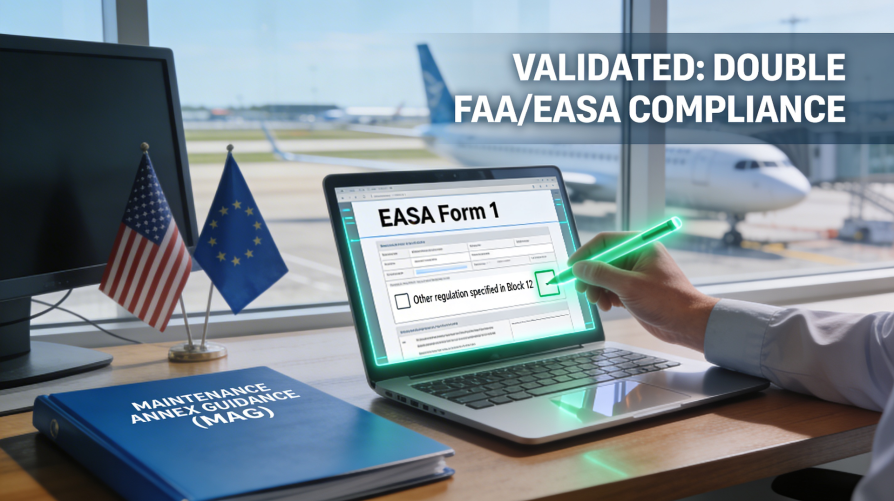
As we move through 2026, the Maintenance Annex Guidance (MAG) Section C requirements have tightened. The "Dual Release" is no longer a simple checkbox; it is a specialized technical process. Yet, audit findings remain alarmingly consistent: Block 12 inconsistencies, lack of specific staff authorization, and a misunderstanding of "Continuing" vs. "Continuous" airworthiness.
The Solution: Our 3-Step Compliance Roadmap
To address these friction points, Aero Consulting has developed a streamlined process specifically for US-based Part 145 organizations:
-
Gap Analysis & Roadmap: We don't just audit; we perform a surgical "Deep Dive" into your FAA procedures to align them with EASA expectations.
-
Staff Certification: Our Dual Release Mastery program ensures your team isn't just "trained" but truly authorized under EASA Special Conditions.
-
Expert Oversight: We provide the independent signature and oversight required to secure your 8130-3s against rejections.
Compliance shouldn't be a bottleneck. It should be your competitive advantage. Whether you’re managing a fleet in MCO or a repair shop in MIA, your path to zero-rejection documentation starts here.
 Version imprimable
Plan du site
Version imprimable
Plan du site
© AERO CONSULTING Formations Aéronautiques France, Europe, USA, Afrique, Océanie - Formations en présentiel, en ligne, en visio, à distance,blended, en e-learning - Expertise, Formation et conseils dans l'aéronautique, l'aéroportuaire et l'industrie du transport aérien - Sécurité aéronautique - Ateliers part 145 et maintenance aéronautique - Conformité aéronautique (EASA EU Ed 2021/1963) - Conformity Monitoring and Safety Management Systems - Compliance with the New Regulation PART 21, PART 145, PART CAMO - EASA FH PART 145 SGS / SMS, Manuels d'exploitation - CRM, SGS - FTS - CAMO - FOD - LOSA - MMEL & MEL - AVI - PER - DGR - PART 21 G et J - Elearning - Florida Aviation - Florida Aviation Compliance, EASA & BASA/MAG; Maintenance Training - CAMO, MRO - Pilot Training, Aviation Partnerships in Florida, FAA–EASA Dual Approval
